Our Office
Visit Us Online


At the office of Dental Illuminations, the health and development of your child's smile are our top priorities. Our goals are to help children establish a strong foundation for a lifetime of good oral health and experience the benefits of healthy, beautiful smiles.

All parents want what's best for their families. When good oral care, including routine dental checkups, start at an early age, our office can closely monitor the development and health of your child's smile as they grow. It's essential to keep in mind that preventive care and timely treatment for any emerging dental issues not only helps to ensure ongoing oral health but also supports overall well-being, and contributes to a positive self-image.
You can rest assured that your child's smile is in the best of hands at our office! We provide gentle and precise care in an environment that's comfortable, warm, and engaging. At the office of Dental Illuminations, we offer a comprehensive range of dental services designed to address the dental needs of children of all ages. Whether it's your little one's first trip to the dentist, a routine visit, treatment for a dental emergency, or more, we're well equipped to provide the care that's needed.
We take a proactive approach and emphasize the importance of dental prevention as the key to good oral health. We provide you and your child with the resources as well as the tools to establish an effective brushing and flossing routine and offer nutritional guidance and advice on potentially harmful oral habits. Our entire team strives to make each visit with your child a positive, informative, and beneficial experience.
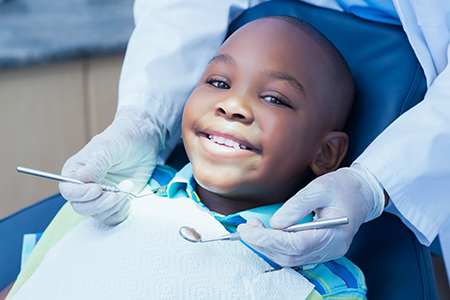
Studies show that children and teens lose an estimated 51 million school hours each year to dental problems. To help your child maintain optimal oral health and a smile that's healthy and bright, we recommend dental checkups and cleanings twice a year.
As skilled and compassionate providers of care, we understand all aspects of dental development and are sensitive to the unique needs of children. At each periodic exam, a member of our professional team will review your child's medical and dental history and then perform a thorough clinical assessment of the teeth, gums, jaws, and the surrounding oral tissues. We'll also check your child's bite, jaw alignment, and function.
Because it's vital to see what's going on below the surface, we'll take digital radiographs as needed, to check for the presence of any cavities, or infection and to evaluate the position of your child's developing teeth and the health of jaw bone. We'll also perform a professional dental cleaning to eliminate any plaque or debris that has accumulated between the teeth or in hard to reach places.
At every stage of your child's development, we'll advise you on the most effective methods of keeping his or her teeth clean and discuss the foods, beverages, and harmful oral habits that can lead to problems. While it can be difficult sometimes to get children into a regular oral hygiene routine, we'll give you tips and advice on how to make brushing and flossing a fun part of their daily activities. As your trusted partner you can rely on the office of Dental Illuminations to keep a close watch on your child's oral health and development.
Establishing a dental partnership when your child is small
Keeping your baby's and toddler's teeth clean
Not allowing your baby to sleep with a bottle of milk or juice.
Bringing your child to the dentist for routine checkups and care
Leading by example and encouraging the recommended tooth brushing and flossing routine
Promoting wise dietary choices and healthy snacking, including replacing sugary drinks with water and limiting sweets
Providing supportive guidance to help your child put away their pacifier and stop thumb or finger sucking at the appropriate time
Making sure your child wears a mouthguard when playing specific sports

Even before your child is born, your little one's first set of teeth is already forming. As a matter of fact, by the time your baby is a year old, some of the front teeth will have already emerged into place. For this reason, it's essential to establish an oral care routine at an early age. As per the recommendations of the American Dental Association and the American Academy of Pediatric Dentistry, parents are encouraged to have their baby see the dentist around the time of their first birthday.
Childhood is a time of incredible physical and emotional changes. As kids go through several stages of development, so do their teeth. Many things, including both genetic and environmental factors, contribute to the health and appearance of your child's smile. While some issues cannot be prevented, there's still a lot you can do to help ensure your child experiences optimal oral health and develops an attractive, functional smile. Our office will make sure your children are instructed in the best methods for caring for their teeth and will provide them with useful, age-appropriate information on following a healthy diet as well as make them aware of which oral habits and activities may be harmful to their teeth and overall well being.
In addition to checking for the presence of dental disease, we also monitor your child's facial growth, jaw development, and alignment of their smile. If orthodontic treatment is indicated, we'll advise you of our recommendations for care. Since many children and teens wear braces, paying extra attention to what they eat and how they maintain their oral hygiene is of the utmost importance.
Beyond good oral hygiene and routine dental care, a balanced, nutritious diet is essential for a healthy smile in a growing child. Sticky, sugary foods and drinks are not only harmful to children's oral health but also detrimental to their overall well-being. A diet rich in nutrients is critical for optimal growth and development and keeping the teeth and gums strong.

A pedodontist is a dentist who has received advanced specialty training in meeting the dental needs of children from infancy to adolescence. Pedodontists, also referred to as "pediatric dentists," study child psychology, behavior management, caring for children with special needs, methods of handling oral/facial trauma, and various techniques for providing anesthesia and sedation. Pedodontists also understand the complexities of facial growth and development and have the clinical skills required to meet the dental needs of all children at every stage of development. Most of all, pedodontists are passionate about what they do and enjoy working with children. They strive to make every dental experience a positive one as they help children establish a strong foundation for good oral health.
Even before your child is born, their first set of teeth is already forming. In fact, by one year of age, some of your baby's front teeth will have already come into place. While the arrival of your baby's first teeth is only one of many developmental milestones, it represents an excellent time to begin a program of oral care. According to recommendations from the American Dental Association, babies should see the dentist around the time of their first birthdays.
Your baby's first teeth typically begin to appear in the 6 to 12-month range. While this is an extraordinary milestone, you need to be aware that your baby may find the experience a little bit uncomfortable. Teething can make babies feel irritable. They may be fussy, have trouble sleeping, not want to eat, and drool quite a bit.
Although you are powerless to speed up the process of teething, there are a few things that you can do to soothe your baby as the new teeth are erupting into place. Common approaches to helping your baby feel more comfortable while getting new teeth, include teething rings or a cold spoon or moist gauze rubbed over their gums.
Even for these few new teeth, it's absolutely essential to establish an effective regimen of oral care. For information on when your baby's first set of teeth will erupt into place, consult this timeline from the American Dental Association: Eruption Charts
Some children persist in sucking their thumbs or fingers beyond their preschool years. For these children, the activity continues to be a source of comfort, relaxation, and security. It may even help them fall asleep at night. However, it's essential to be aware that in the long-term, a finger sucking habit is not healthy.
If your child's thumb or finger sucking habit is still present when the permanent teeth begin to come in, your child is at a higher risk of developing a bad bite. By the age of five or six years, you need to constructively and gently help your child stop the habit.
It's also a good idea to have a comprehensive evaluation at this time. Your pedodontist can assess if there are any habit related alterations to the alignment of your child's teeth or jaws, or if it is affecting their speech or swallowing patterns. They can also discuss habit control strategies with you, as well as follow your child's bite and facial development as they grow. If interceptive appliances or corrective orthodontic care are recommended, the timetable and best options in care will be explained in complete detail.