

At the office of Dental Illuminations, we take a proactive approach to oral health because prevention produces the best long-term results. Regular oral exams let our team identify subtle changes early, intervene before small issues become complex, and tailor care to each patient's lifestyle and medical background. Our preventive services include thorough oral examinations, professional cleanings, targeted screenings for oral cancer, and clear guidance on daily hygiene, nutrition, and habits that affect dental health.
Your initial appointment establishes a baseline for future care and gives us the context we need to build a personalized plan. We begin with a careful review of your medical and dental history, including medications, allergies, and any concerns you bring. This conversation helps us understand risk factors that might affect treatment choices and preventive recommendations.
Next comes a detailed clinical evaluation. We examine the teeth, gums, jaw joints, and soft tissues of the mouth, head, and neck. As part of this assessment we check for signs of gum disease, tooth wear from grinding, alignment issues, and any lesions or abnormalities that may warrant further investigation. When appropriate, we will recommend diagnostic imaging to reveal conditions not visible during the visual exam.
Finally, we discuss our findings in plain language and outline options for care. Whether the plan involves simple home-care adjustments, scheduling a professional cleaning, or monitoring a condition over time, you’ll leave with a clear understanding of next steps and what to watch for between visits.

The mouth is not an isolated system — it reflects and influences whole-body health. Conditions such as persistent gum inflammation can signal or exacerbate broader medical concerns, while certain systemic illnesses often show early signs inside the oral cavity. That two-way relationship makes oral exams an important part of preventive medicine, helping to identify risks that extend beyond the teeth.
During an exam we look for indicators that may point to wider health issues, including unusual oral lesions, chronic dry mouth, or rapidly progressing gum problems. These findings can inform coordinated care with your medical providers when needed, ensuring a fuller picture of your health rather than treating the mouth and body independently.
To make this possible, our clinicians combine what we observe in the mouth with information from your medical history and any symptoms you report. When oral signs suggest a need for medical follow-up, we’ll communicate those concerns clearly so you can pursue appropriate evaluation or treatment without delay.
Consistent checkups and routine professional cleanings are central to preventing dental disease. Even the most diligent at-home care cannot remove all plaque and hardened buildup from every surface. A hygienist’s tools and techniques are designed to reach beneath the gumline and into tight spaces, removing deposits that contribute to cavities and periodontal disease.
Routine visits also create opportunities for early detection. Small cavities, early signs of gum disease, and other issues are easiest to treat when found promptly. Rather than waiting for pain or visible damage, regular monitoring keeps treatment simpler, quicker, and more predictable.
For children and adolescents, periodic exams are especially important because they allow us to track growth, jaw development, and the timing of tooth eruption. Early intervention — whether preventive advice or coordination with an orthodontist — can reduce the need for more extensive treatment later. For adults, regular care supports long-term function, comfort, and the appearance of the smile across decades.
Education is another benefit of these visits. We take time to demonstrate brushing and flossing techniques, recommend routine habits for better oral health, and explain how diet and certain medications affect the mouth. Empowered with practical guidance, patients can preserve their oral health between appointments.
While visual inspection is essential, diagnostic images reveal what’s hidden under the enamel and gum tissue. X-rays and digital radiographs show the roots of teeth, the condition of the supporting bone, and other structures that cannot be assessed by sight alone. This deeper view helps identify decay between teeth, assess the health of bone around roots, and locate abnormalities early.
Modern digital imaging has made these tools faster and safer than older film-based methods. Digital sensors capture high-quality images with minimal radiation exposure, and those images can be viewed immediately, compared over time, and securely stored in your record for longitudinal monitoring. The speed and clarity of digital radiography also improve communication, allowing us to show you findings and explain recommended care more effectively.
Imaging is selected based on clinical need; not every visit requires the same set of films. Your dentist will recommend the appropriate type and frequency of imaging according to your oral health status, symptoms, and any planned treatment so that diagnostic information is available when it matters most.

Different imaging techniques serve specific diagnostic purposes, and choosing the right one helps us deliver precise, minimally invasive care. Periapical images focus on one or two teeth from crown to root and are ideal for evaluating root health and the bone immediately surrounding a tooth. Bitewing films are excellent at revealing early decay between posterior teeth and for monitoring restorations.
A full-mouth series combines multiple periapical and bitewing views to deliver a comprehensive snapshot of every tooth and much of the supporting bone — useful when a thorough baseline is needed. Panoramic imaging provides a single wide view of the jaws, temporomandibular joints, and developing or impacted teeth; it’s commonly used for planning extractions, evaluating growth, and screening for broad structural issues.
For complex cases and surgical planning, three-dimensional imaging such as cone-beam computed tomography (CBCT) offers highly detailed spatial information about bone anatomy, nerve pathways, and the positions of teeth. This level of detail supports precise treatment planning for procedures like implant placement or advanced oral surgery.
We’ll always balance diagnostic benefit with appropriateness: the goal is to use imaging judiciously to inform care while minimizing exposure and unnecessary tests. When images are taken, we’ll explain what they show and how they influence the recommended approach to treatment or monitoring.
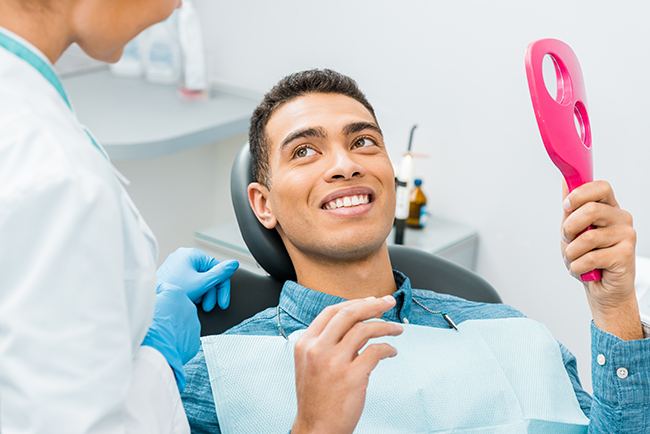
Regular oral exams are the foundation of long-lasting dental health. They allow for early detection, informed treatment planning, and collaborative care that connects oral findings with overall health. At Dental Illuminations, our goal is to provide clear guidance, gentle hands-on care, and practical strategies patients can use every day to maintain a healthy mouth.
If you’d like to learn more about what to expect during an oral exam or whether it’s time to schedule one, please contact us for more information.


An oral exam is a clinical assessment of the teeth, gums, soft tissues, jaws and related structures that helps detect problems early and guide preventive care. Regular exams allow clinicians to track changes over time, identify risk factors and intervene before minor issues become more complex. Because many dental conditions are easier to treat when found early, exams are a cornerstone of long-term oral health.
During an exam the dental team also evaluates hygiene needs and provides personalized guidance to support daily care. Exams create a documented baseline so future changes can be compared objectively. Patients who participate in routine monitoring benefit from more predictable outcomes and simpler treatments when problems arise.
Your first visit begins with a careful review of your medical and dental history, including current medications, allergies and any symptoms or concerns you want addressed. The clinician then performs a head, neck and intraoral examination that looks at tooth integrity, gum health, bite relationships and the condition of the soft tissues. When indicated, diagnostic imaging such as bitewings or periapical films may be taken to reveal areas that are not visible in a visual exam.
At the end of the appointment the dentist or hygienist will explain findings in plain language and recommend next steps, which might include hygiene instruction, a cleaning, monitoring or referral for further evaluation. You will leave with a clear plan and a timeline for follow-up care if needed. The goal is to make sure you understand what was found and how to protect your oral health going forward.
The oral cavity often shows early signs of systemic conditions and the exam can reveal indicators such as persistent gum inflammation, oral lesions or chronic dry mouth that may relate to broader health issues. Because the mouth and body are connected, findings during an exam can prompt coordination with your medical providers to investigate or manage underlying conditions. Clinicians use the information gathered in the oral exam together with your medical history and symptoms to form a more complete health picture.
When signs suggest a need for medical follow-up, the dental team communicates those concerns clearly and documents them for your records. This collaborative approach helps ensure that oral findings are not treated in isolation. Early recognition and timely referral can improve outcomes when an oral sign reflects a systemic problem.
Recall intervals are individualized based on your current oral health, risk factors and any ongoing treatment needs, but many patients benefit from exams every six months to maintain preventive oversight. Patients with higher risk for decay or periodontal disease, active treatments or certain medical conditions may require more frequent visits, while very low-risk patients might be seen at longer intervals determined by the dentist. The best schedule is one that balances timely detection with your personal health profile.
At Dental Illuminations, located at 660 Plainsboro Rd, Princeton Meadows Shopping Center, Plainsboro, NJ 08536, our clinicians will recommend a recall plan tailored to your needs and explain the reasons for that timing. We review changes at each visit so the interval can be adjusted as your oral health evolves. Keeping scheduled exams makes it easier to prevent small problems from becoming larger ones.
Diagnostic imaging complements the visual exam by revealing structures under the enamel and gum tissue, including tooth roots, supporting bone and areas between teeth that are not visible to the eye. Digital radiographs are fast and use minimal radiation to capture clear images that help detect cavities, assess bone levels and evaluate the health of existing restorations. Images can be viewed immediately, stored for comparison over time and used to explain findings to patients more effectively.
Not every appointment requires the same set of images; the dentist selects imaging based on clinical need, symptoms and treatment planning requirements. Using imaging judiciously ensures valuable diagnostic information is available while minimizing unnecessary exposure. When advanced three-dimensional detail is required for complex planning, modalities such as CBCT may be recommended.
Several imaging modalities are used depending on diagnostic needs: bitewing films show decay between posterior teeth and monitor restorations, periapical images focus on one or two teeth and their roots, and panoramic images provide a broad view of the jaws and temporomandibular joints. Each type serves a distinct purpose and helps the clinician evaluate different anatomic areas efficiently. Modern digital sensors make these images available quickly for immediate review.
For surgical planning or complex cases, three-dimensional cone-beam computed tomography (CBCT) delivers detailed spatial information about bone anatomy and nerve positions. The choice of imaging is driven by the clinical question at hand and the goal of obtaining the most relevant information with the least necessary exposure. Your dentist will explain why a particular image is recommended and how it will affect treatment decisions.
Yes, oral cancer screening is a standard component of a comprehensive oral exam and includes both visual inspection and hands-on evaluation of the lips, tongue, floor of mouth and other soft tissues. Clinicians look for persistent sores, unusual red or white patches and any lumps or areas that feel abnormal, and they document findings for comparison at future visits. Identifying suspicious areas early increases the chance of successful treatment.
If a lesion appears concerning, the dentist will recommend appropriate next steps which may include closer monitoring, photographic documentation, referral to a specialist or biopsy when indicated. The screening process is thorough yet noninvasive, and the dental team will clearly communicate any concerns so you can pursue timely evaluation. Routine screenings are an important part of preventive care for adults of all ages.
Exams for children focus heavily on development, eruption patterns, and behavior that can affect long-term oral health, such as thumb-sucking or improper oral hygiene. The clinician tracks jaw growth, timing of tooth eruption and the potential need for early orthodontic evaluation while also providing age-appropriate preventive guidance like fluoride use and sealants. These visits emphasize education for parents and young patients to establish healthy habits early.
Adult exams place more emphasis on periodontal health, wear from clenching or grinding, the condition of restorations and screening for oral lesions that become more common with age. Frequency and diagnostic needs are tailored to the adult patient’s history, medical profile and lifestyle factors. In both children and adults the goal is early detection, individualized prevention and clear communication about next steps.
Before your appointment gather a list of current medications, recent medical history and any symptoms you want to discuss so the dental team has complete context for evaluation. Bring previous dental records or radiographs if you are a new patient, and prepare questions about concerns or goals you have for your oral health. Maintaining your regular oral hygiene before the visit will help the clinician get an accurate picture of your routine care.
If you have specific symptoms such as pain, swelling or bleeding, note when they started and any factors that make them better or worse to help guide the examination. Also let the staff know about any allergies or changes in your overall health since your last visit. Being prepared improves diagnostic accuracy and helps the team develop a personalized plan during the appointment.
If the exam identifies a problem the dentist will explain the finding, discuss appropriate options and outline recommended next steps, which may include preventive measures, monitoring or referral for specialized care. Where possible the team emphasizes minimally invasive approaches and early treatment to preserve natural tooth structure and support long-term health. All findings are documented and discussed so you understand the rationale for any recommended care.
The practice will schedule any necessary follow-up appointments and provide clear instructions for interim home care, symptom monitoring and when to seek earlier attention. If coordination with a medical provider or specialist is needed, that communication is arranged to ensure continuity of care. The objective is timely, informed action that reduces risk and supports a healthy, functional smile.

Ready to schedule your next visit? We'd love to welcome you to our practice.
Located in the Princeton Meadows Shopping Center in Plainsboro, NJ, Dental Illuminations is conveniently accessible for families throughout Plainsboro Township and the surrounding communities. Our friendly team is here to help with scheduling, answer questions about treatment options, or assist new patients getting started. Give us a call or use our online form — we look forward to helping you achieve a healthy, beautiful smile.

Back to top