

CEREC® technology was built around one clear idea: give patients a high-quality restoration in the time it takes to sit comfortably in the dental chair. By using chairside design and milling, clinicians can assess, design, and place a ceramic restoration within the same visit. That eliminates the common inconveniences of multiple appointments and provisional restorations while preserving clinical precision.
For many patients, the most noticeable difference is the streamlined workflow. Digital scanning captures exact surface details, computer-guided design refines margins and occlusion, and on-site milling produces a final restoration from durable ceramic material. Each step is coordinated to minimize surprises and maximize the chance of a seamless fit the first time.
Because the entire process is completed under direct clinical oversight, adjustments are made in real time. That means fewer callbacks for remakes and a more comfortable overall experience. The combination of speed and control makes CEREC® an attractive option for patients who need restorative care but prefer to limit office visits.

A typical CEREC® appointment begins with a careful examination and any necessary local anesthesia to ensure comfort. Instead of traditional putty impressions, an intraoral scanner creates a precise digital map of the prepared tooth and surrounding bite. Patients often find the scanning process quicker and less invasive than conventional impressions.
Once the scan is complete, the dentist uses specialized CAD software to design the restoration, tailoring contours, contacts, and shade to match the natural dentition. This design phase is collaborative: clinicians can refine occlusion and esthetics on screen before sending the data to the milling unit. Because design and fabrication happen on-site, there's immediate control over fit and appearance.
When the ceramic block is milled, it’s then finished, stained or glazed if needed, and bonded into place using proven adhesive protocols. The result is a single appointment that delivers both functional stability and a natural appearance. Many patients appreciate returning to their daily routines with a finished restoration in place the same day.
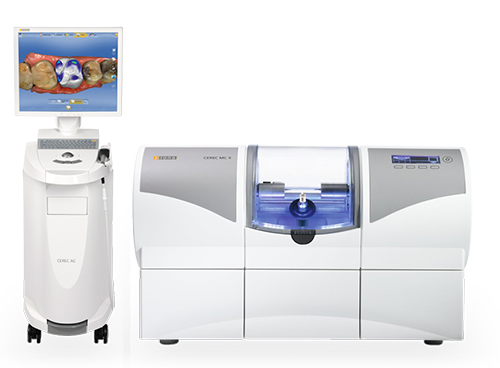
CEREC® integrates three core components—digital imaging, computer-aided design, and computer-aided manufacturing (CAD/CAM)—to create restorations that balance precision and esthetics. The intraoral scanner produces high-resolution 3D images that serve as the foundation for a restoration designed to respect both form and function.
The CAD software allows clinicians to evaluate and modify the restoration virtually, checking contacts, occlusion, and contour before fabrication. This virtual preview helps reduce adjustments after placement and supports a more predictable clinical outcome. The files are then sent to a grinding or milling unit that sculpts the restoration from a single ceramic block.
Because modern ceramic materials offer excellent strength and translucency, the restorations produced by CEREC® can mimic natural tooth structure while providing long-term durability. The integrated workflow reduces human error associated with multiple handoffs and produces a restoration that is consistent with the original digital plan.

Contemporary ceramic blocks used with CEREC® are engineered for both strength and esthetic integration. They exhibit favorable fracture resistance while also allowing careful color and translucency matching. This combination makes them suitable for crowns, inlays, onlays, and other restorations where both function and appearance matter.
When a restoration is properly designed, milled, and bonded, it becomes a predictable long-term solution. The adhesive techniques used to seat ceramic restorations enhance retention and distribute biting forces in a way that helps protect the underlying tooth structure. Regular maintenance and good oral hygiene further extend service life.
It’s important to understand that material selection and clinical technique both contribute to success. A restoration that fits well, respects occlusal forces, and is placed using established adhesive protocols is far more likely to function reliably for years. These are the clinical principles that guide the selection and use of CEREC® ceramics in restorative care.
CEREC® is a versatile option for many restorative situations, but candidacy depends on clinical factors such as the extent of tooth damage, bite relationships, and aesthetic goals. During your evaluation, the clinician will consider these elements and recommend the best restorative pathway—whether that is a single-unit ceramic crown, an inlay or onlay, or an alternative treatment.
Post-placement care is straightforward: maintain regular oral hygiene, attend routine dental exams, and report any unusual sensitivity or changes in bite. Because the restoration is bonded to the tooth, avoiding habits that generate excessive force—like heavy clenching or chewing very hard objects—helps preserve the restoration over time.
For patients who value conservation of natural tooth structure, CEREC® inlays and onlays can be an excellent middle ground between simple fillings and full-coverage crowns. A thoughtful discussion with your dentist will clarify which approach best aligns with your oral health needs and long-term objectives.
In summary, CEREC® brings together digital scanning, precision design, and onsite milling to provide efficient restorative care that meets modern expectations for speed and quality. If you’d like to learn more about how same-day ceramic restorations might fit into your treatment plan, please contact Dental Illuminations for additional information and guidance.


CEREC is an integrated digital workflow that combines intraoral scanning, computer-aided design, and on-site milling to create ceramic restorations in a single visit. Unlike traditional lab-fabricated crowns, CEREC eliminates the need for physical impressions, temporary restorations, and multiple appointments. The digital process captures precise anatomical details and stores them as a permanent record for future reference.
Because design and fabrication happen under the clinician's direct supervision, adjustments can be made immediately to improve fit and aesthetics. This consolidation of steps reduces handoffs between providers and helps maintain consistency with the original digital plan. The result is a restoration that is engineered to respect occlusion, contacts, and esthetic goals from the outset.
A typical appointment begins with a clinical exam and any necessary local anesthesia to ensure comfort during tooth preparation. The prepared tooth is scanned with an intraoral camera to capture a high-resolution 3D image, which the dentist uses to design the restoration with CAD software. The design is evaluated and refined on screen to verify margins, contacts, and occlusion before fabrication.
Once the design is finalized, the data is sent to an on-site milling unit that sculpts the restoration from a ceramic block. The restoration is then finished, stained or glazed if required, and bonded using established adhesive protocols. Patients leave with a definitive restoration placed and polished in the same appointment.
Candidates for CEREC typically include patients who need single-unit crowns, inlays, onlays, or small restorations and who prefer to limit the number of office visits. Clinical suitability depends on factors such as the amount of remaining tooth structure, the location of the tooth, and the patient's bite dynamics. A thorough clinical evaluation and radiographic assessment help determine whether a same-day ceramic restoration is appropriate.
Patients with complex full-arch rehabilitations, extensive occlusal wear, or certain deep subgingival margins may require alternative approaches or additional planning. Your dentist will discuss the options and recommend the treatment that best preserves tooth structure and meets long-term functional and esthetic objectives. Proper case selection is key to predictable outcomes with CEREC restorations.
CEREC systems are commonly used to fabricate crowns, inlays, onlays, and certain veneers, providing solutions that range from conservative repairs to full-coverage restorations. The system is particularly well suited to single-unit restorations where precise fit and occlusion are essential. Because the restorations are produced from ceramic blocks, they are appropriate for both posterior and many anterior applications when translucency and shade matching are addressed.
Clinicians can also use CEREC for implant crowns and small prosthetic components when case parameters allow. The versatility of the CAD/CAM workflow supports a broad spectrum of restorative needs while maintaining control over each step from scan to placement. When multiple units or complex esthetic layering are required, additional laboratory collaboration may be recommended.
When designed, fabricated, and bonded correctly, CEREC ceramic restorations can provide many years of reliable service similar to other high-quality ceramic restorations. Longevity depends on factors such as occlusal forces, bruxism, the amount of remaining tooth structure, and the quality of the adhesive technique used at placement. Regular dental exams and good oral hygiene are important to identify potential issues early and to maintain restorative health.
Material choice and clinical technique both play significant roles in long-term success, so appropriate selection of ceramic blocks and meticulous bonding protocols are essential. Patients should avoid habits that place excessive force on restorations, and follow-up care should include periodic bite evaluations and maintenance as indicated. At Dental Illuminations our team emphasizes technique and follow-up to support durable outcomes.
Accuracy begins with a high-quality intraoral scan that records the prepared tooth and surrounding occlusion in three dimensions. The CAD software allows clinicians to evaluate contacts, interproximal relationships, and occlusal scheme virtually, making targeted adjustments before fabrication. Milling units reproduce the digital design precisely, and finishing steps refine margins and surface anatomy for an optimal clinical fit.
After seating, the restoration is checked for contacts, occlusion, and marginal adaptation, and clinicians make irreversible adjustments if necessary to protect the restoration and the opposing dentition. This real-time verification reduces the need for remakes and callbacks. Proper cementation or bonding protocols complete the process and help maintain a reliable interface between restoration and tooth.
CEREC restorations are milled from high-strength ceramic blocks engineered to balance durability and esthetic properties such as translucency and color depth. Popular materials include lithium disilicate and other advanced porcelains that mimic enamel-like optical characteristics while offering favorable fracture resistance. These ceramics can be stained and glazed to closely match neighboring natural teeth for a harmonious appearance.
While ceramics do not have the exact flexural properties of natural dentin, proper restoration design and adhesive bonding help distribute forces and protect the underlying tooth. Material selection is guided by the clinical scenario, with stronger ceramics chosen for high-load posterior regions and more translucent options used anteriorly. A careful approach to material selection and occlusal management supports both function and esthetics.
Certain complex cases may be better served by alternative workflows, such as when extensive full-coverage work, intricate layered esthetics, or unusual occlusal schemes require laboratory collaboration. Teeth with severely compromised structure, short clinical crowns, or margins that extend deeply below the gum line may need additional procedures before a reliable same-day restoration can be placed. Severe parafunctional habits and uncontrolled bruxism may also necessitate protective measures or different restorative choices.
When CEREC is not the ideal solution, clinicians will discuss other options that prioritize long-term tooth preservation and predictable function. Diagnostic records, including radiographs and occlusal analysis, guide the recommendation to ensure the chosen treatment aligns with the patient's oral health goals. Transparent clinical reasoning helps patients understand the rationale for any alternative approach.
Recovery from a same-day crown is typically straightforward because the restoration is completed and bonded during the appointment, eliminating the interim period with a provisional crown. Minor sensitivity for a few days can occur as the tooth adjusts, but significant or persistent pain should be reported to the dental team for evaluation. Normal oral hygiene routines can generally resume, taking care to be gentle around the new restoration for the first 24 hours if a bonding agent is still curing.
Patients should attend regular dental checkups so the clinician can monitor the restoration, surrounding tissues, and occlusion over time. Avoiding hard or brittle foods that could generate excessive force on the restoration helps protect its integrity. Prompt attention to any changes in fit, bite, or sensation supports timely interventions and prolongs restoration life.
Intraoral scanning removes the need for traditional putty impressions, offering a more comfortable and quicker scanning experience while producing highly detailed digital records. On-site milling allows the clinician to maintain control over the entire fabrication process and to make immediate refinements to fit, color, and anatomy. For many patients the convenience of completing treatment in a single visit reduces anxiety and minimizes disruption to daily life.
The integrated workflow also supports predictable clinical outcomes by reducing manual steps and handoffs that can introduce variability. Communication between patient and clinician during the design phase can address esthetic preferences in real time, improving satisfaction with the final result. If you have questions about how this technology will be used in your care, the team at Dental Illuminations can explain the workflow and what to expect during your visit.

Ready to schedule your next visit? We'd love to welcome you to our practice.
Located in the Princeton Meadows Shopping Center in Plainsboro, NJ, Dental Illuminations is conveniently accessible for families throughout Plainsboro Township and the surrounding communities. Our friendly team is here to help with scheduling, answer questions about treatment options, or assist new patients getting started. Give us a call or use our online form — we look forward to helping you achieve a healthy, beautiful smile.

Back to top
